Biggest G3 OLED Buying Mistakes (And How to Avoid Them)
Introduction
The LG G3 OLED represents a watershed moment in the evolution of self-emissive display technology. By integrating Micro Lens Array (MLA) technology, LG addressed the primary historical criticism of OLED panels: peak brightness. However, because the G3 is a premium, specialized piece of equipment designed for a specific type of installation and viewing experience, it is remarkably easy for consumers to make expensive errors during the purchasing and setup process. When a television costs several thousand dollars and relies on cutting-edge hardware like the Brightness Booster Max architecture, understanding the nuances of the panel is the difference between a transformative cinematic experience and a frustrating layout challenge. This article examines the most frequent pitfalls buyers face when investing in the LG G3 and provides actionable strategies to ensure your investment delivers on its high-end promise.
LG G3 OLED: A Detailed Analysis
To understand the buying mistakes associated with the LG G3, one must first understand what makes this television unique compared to its siblings, like the C3 or the newer G4. The "G" in the model name stands for "Gallery," which defines the entire physical and technical philosophy of the television. Unlike standard OLEDs that use a traditional organic layer to produce light, the G3 utilizes a sophisticated layer of billions of microscopic lenses. These lenses redirect light that would otherwise be lost to internal reflections back toward the viewer. The result is a television capable of hitting peak brightness levels exceeding 1,400 nits in HDR—a figure previously reserved for high-end LED-LCD televisions.
The heart of the G3 is the α9 AI Processor Gen6. This silicon is responsible for the sophisticated tone mapping and upscaling that defines the LG experience. For the buyer, this means that even lower-resolution content from cable boxes or older streaming apps is treated with high-frequency detail enhancement and noise reduction. Furthermore, the G3 features LG’s "One Wall Design," which allows the screen to sit perfectly flush against the drywall with zero gap. This is achieved through a recessed internal chassis and a specialized wall mount included in the box. While this provides a stunning aesthetic, it is also the source of the most common installation errors.
From a performance standpoint, the G3 covers nearly 100% of the DCI-P3 color space, ensuring that HDR10 and Dolby Vision content looks exactly as the colorist intended. The inclusion of four full-bandwidth HDMI 2.1 ports is a massive draw for gamers, supporting 4K at 120Hz, Variable Refresh Rate (VRR), and Auto Low Latency Mode (ALLM). However, despite this impressive spec sheet, the G3 remains a specific tool for a specific job. Buying it without considering its mounting requirements, its lack of a traditional stand, or the thermal characteristics of its high-brightness panel can lead to immediate buyer's remorse.
Pros and Cons of the LG G3 OLED
- Incredible Peak Brightness: Thanks to the MLA (Micro Lens Array) technology, the G3 is significantly brighter than the C3 and older G-series models, making it much more viable for bright living rooms.
- Perfect Blacks and Infinite Contrast: As an OLED, each pixel turns off completely, providing a level of depth and shadow detail that QLED and Mini-LED screens cannot match.
- Superior Gaming Features: With G-Sync, FreeSync, and a dedicated Game Optimizer menu, it remains one of the best choices for PlayStation 5, Xbox Series X, and PC gaming.
- Ultra-Slim Profile: The Gallery Design is exceptionally sleek, making the TV look more like a piece of art than a piece of electronics when properly mounted.
- Robust Build Quality and Warranty: LG typically offers a 5-year limited panel warranty on the G3, reflecting confidence in their heat-dissipation hardware.
- Lack of a Tabletop Stand: The G3 does not come with a stand in the box. It is designed to be wall-mounted, and buying a separate stand can be an unexpected added cost.
- Specific Mounting Requirements: Because it is meant to be flush-mounted, cable management must be planned meticulously before the TV is even taken out of the box.
- Aggressive ABL (Auto Brightness Limiter): While much improved, the G3 can still dim slightly during long, sustained bright scenes to protect the panel from heat damage.
Comparing the G3 to Industry Alternatives
Before committing to the G3, it is helpful to see how it stacks up against the broader market. Many buyers mistakenly choose the G3 when the C3 would suffice, or they choose it over a QD-OLED (like the Samsung S95C) without realizing the differences in color volume.
| Feature | LG G3 (MLA-OLED) | LG C3 (Standard OLED) | Samsung S95C (QD-OLED) |
|---|---|---|---|
| Panel Type | WOLED + Micro Lens Array | Standard WOLED (Evo) | Quantum Dot OLED |
| Peak Brightness (HDR) | Approx. 1,400+ nits | Approx. 800+ nits | Approx. 1,300+ nits |
| Mounting Style | Flush Wall Mount (Included) | Pedestal Stand (Included) | Stand (Included) / One Connect Box |
| In-Box Stand | No | Yes | Yes |
| Color Saturation | Excellent (White Subpixel) | Great | Superior (No White Subpixel) |
| Warranty | 5-Year Panel Warranty | 1-Year Standard | 1-Year Standard |
Mistake #1: Ignoring the "No Stand" Reality
The most frequent and frustrating mistake buyers make with the LG G3 is failing to realize that it does not come with a tabletop stand. LG’s Gallery series is intended for wall mounting. When a consumer receives the unit and unboxes it in their living room, they are often surprised to find only a slim wall bracket and no feet or pedestal. While LG sells an official stand separately, it often costs upwards of $150 and has a slight backward tilt that some viewers find distracting.
How to Avoid It: If you do not plan to wall mount your television, factor the cost of the LG Stand or a third-party VESA mount stand into your budget from day one. Better yet, if you are strictly using a media console, consider the LG C3 or C4 instead. The G-series is technically superior due to MLA, but if the mounting benefits are lost on your setup, the value proposition shifts.
Mistake #2: Underestimating Cable Management Needs
Because the G3 is designed to sit perfectly flush against the wall, there is virtually zero space behind the chassis for bulky cables or poorly positioned power outlets. Many buyers assume they can simply hang the G3 on their existing wall setup, only to find that their HDMI cables or power bricks create a "bump" that prevents the TV from locking into its flush position. This ruins the primary aesthetic reason for buying the G3 in the first place.
Find top-rated TVs & Home Theater products at great prices.
Browse Now →How to Avoid It: To achieve that seamless "Gallery" look, you must plan for an in-wall cable management box (like a Legrand or Sanus media box) located precisely where the G3's recessed ports are. You should also invest in ultra-slim HDMI 2.1 cables. If you are renting or cannot cut into your drywall, the G3 might not look the way you expect once installed.
Mistake #3: Choosing the Wrong Size for View Distance
With the G3, the clarity and pixel density are so high that users often under-buy on size. Because OLEDs have such perfect viewing angles, you can sit closer to a larger screen without experiencing the color shift or "screen door effect" common in older technologies. A common mistake is choosing the 55-inch or 65-inch model for a room where an 77-inch or 83-inch model would provide a truly cinematic experience.
How to Avoid It: Aim for a 40-degree field of view for movies. For a 65-inch G3, this means sitting roughly 6 to 9 feet away. If your sofa is 10 to 12 feet away, you should prioritize the 77-inch model. Remember that the G3's MLA technology is most effective at larger scales where the brightness boost can really fill your peripheral vision.
Mistake #4: Mismanaging the Ambient Light Environment
While the G3 is significantly brighter than previous OLEDs, it still uses a glass-fronted panel that can reflect direct sunlight. A common mistake is placing the G3 directly opposite a large, north-facing window with no curtains. While the MLA tech can "punch through" reflections better than any OLED before it, direct sunlight on the panel can still wash out the perfect blacks that you paid a premium for.
How to Avoid It: Use the G3 in a room with controlled lighting. While it is the best OLED for bright rooms, it is not a replacement for a high-output Mini-LED (like the Sony X95L or Samsung QN90C) if your room is literally filled with floor-to-ceiling windows that cannot be covered. Use blackout or sheer curtains during peak daylight hours to maintain the G3's contrast performance.
Mistake #5: Setting and Forgetting (The Calibration Error)
LG ships the G3 with "Energy Saving" modes enabled by default to meet regulatory standards. Many owners plug the TV in, find the picture looks "dim" or "yellow," and assume the TV isn't as bright as advertised. They fail to navigate the menus to disable the eco-settings or switch to the proper picture modes.
How to Avoid It: Immediately upon setup, disable the "Auto Energy Saving" feature. For the most accurate "as the director intended" look, use Filmmaker Mode for HDR and Dolby Vision content. For gaming, ensure the Game Optimizer is turned on, but check that the "Black Stabilizer" hasn't been set too high, which can wash out the image.
LG G3 Buying Guide: Real-World Use Cases
Deciding whether the G3 is the right fit depends largely on your lifestyle. Below are three common scenarios and how the G3 fits into each.
Shop the latest TVs & Home Theater picks on Amazon.
Browse Now →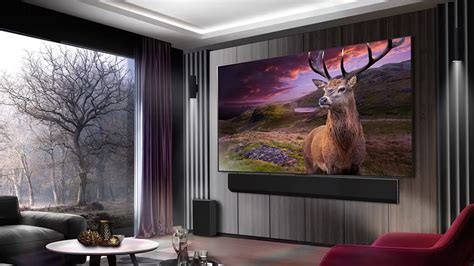
The Dedicated Home Theater Enthusiast
For the user with a dark, windowless basement or a room with blackout curtains, the G3 is nearly perfect. In this environment, the MLA technology allows the TV to produce spectacular specular highlights—the glint of sun off a car or the glow of a lightsaber—without raising the floor of the black levels. This user should always choose the 77-inch or larger size if the budget allows.
The Competitive Gamer
The G3 is a powerhouse for gaming, featuring a sub-10ms input lag and support for 144Hz (on the newer G4, though the G3 is capped at 120Hz which is the console limit). The mistake here is often ignoring the Sound. Because the G3 is so thin, its internal speakers are mediocre. Gamers should pair the G3 with a high-end soundbar or an AVR system to match the visual fidelity.
The Casual Living Room Viewer
In a standard living room where the family watches news, sports, and occasional movies, the G3 is actually an "over-achiever." If you are mostly watching 720p cable news, you are not utilizing the MLA technology or the HDR capabilities of the panel. For this buyer, the primary mistake is spending the extra $1,000 over the LG C3 when they won't perceive the brightness increase in SDR (Standard Dynamic Range) content.
Technical Considerations for Long-Term Ownership
Owning a high-end OLED requires a different maintenance mindset compared to an LCD. The G3 includes a heat sink—a physical layer of metal that helps pull heat away from the organic material. This is crucial because heat is the primary driver of "burn-in" or permanent image retention. One mistake buyers make is cutting power to the TV via a smart plug or a power strip every night. OLEDs need to remain in standby mode so they can run "Pixel Cleaning" cycles while you sleep. These cycles move the voltage around the panel to ensure uniform wear. If you cut the power, the TV cannot perform this maintenance, significantly shortening its lifespan.
Another consideration is the 5-year warranty. It is important to read the fine print. LG’s 5-year panel warranty usually covers the cost of the panel itself, but it may not cover the labor costs of a technician after the first year. Understanding this helps avoid surprise repair bills three years down the line.
Conclusion
The LG G3 OLED is a masterpiece of modern display engineering, bridging the gap between the traditional ink-black depths of OLED and the searing intensity of LED-LCDs. However, its specialized design demands a more thoughtful approach than your average television purchase. By avoiding the common mistakes of ignoring the stand-less design, neglecting complex cable management, and failing to optimize software settings, you can ensure that your G3 looks as good in your home as it does in a professional showroom. Whether you are a cinephile chasing the perfect HDR highlight or a gamer demanding the lowest possible latency, the G3 offers an unrivaled experience—provided you do the legwork to support its premium nature. Investing in the G3 is not just about buying a TV; it is about committing to a specific, high-end installation philosophy that pays dividends in every frame of film you watch.