Difference Between Seagate Exos Mozaic M 30Tb Hard Drive and Gmktec Nucbox G10 Mini Pc Explained
In the rapidly evolving landscape of personal computing and enterprise data management, users often find themselves navigating a sea of specialized hardware. Two products that represent the pinnacle of their respective categories—yet serve entirely different functions—are the Seagate Exos Mozaic M 30TB Hard Drive and the Gmktec Nucbox G10 Mini PC. While both are "hardware" that might sit on a desk or inside a server rack, the fundamental difference lies in their purpose: one is a massive digital warehouse for data, while the other is a compact engine designed to process that data.
Understanding the distinction between these two devices is crucial for professionals, creative designers, and IT enthusiasts. Buying a 30TB hard drive when you actually need a secondary computer, or purchasing a Mini PC when you lack sufficient storage for a video library, are common pitfalls in the tech procurement process. This article provides an exhaustive analysis of the Seagate Exos Mozaic M and the Gmktec Nucbox G10, exploring their specifications, use cases, and how they might even work together in a sophisticated home office or enterprise environment.
Detailed Review: Seagate Exos Mozaic M 30TB Hard Drive
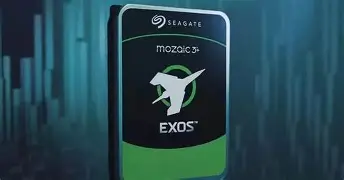
The Seagate Exos Mozaic M 30TB represents a monumental shift in storage density. It is built upon Seagate’s Mozaic 3+ platform, which utilizes Heat-Assisted Magnetic Recording (HAMR) technology. For the uninitiated, HAMR is the "holy grail" of hard drive engineering, allowing for more data bits to be packed into the same physical space by momentarily heating the storage medium with a laser. This allows the 30TB capacity to be achieved within a standard 3.5-inch form factor that looks nearly identical to the hard drives of ten years ago, despite holding thirty times the data.
The "Exos" branding indicates that this is an enterprise-grade drive. Unlike consumer-level drives found in basic external enclosures, the Exos Mozaic M is designed for 24/7 operation in data centers. It features advanced vibration sensors, helium-sealed technology to reduce friction, and a Mean Time Between Failure (MTBF) rating that far exceeds standard desktop drives. The Mozaic M specifically targets the "hyperscale" market—think cloud providers and massive backup farms—but it has increasingly found its way into the workstations of high-end video editors and NAS (Network Attached Storage) enthusiasts who refuse to compromise on density.
Performance-wise, while it cannot match the raw speed of a Solid State Drive (SSD), the Exos Mozaic M is exceptionally fast for a mechanical platter. It typically offers sustained data transfer rates that saturate much of the SATA or SAS interface capacity. However, the real value here isn't the burst speed; it is the sheer volume of information that can be stored on a single set of spinning disks. With 30TB, a user can store roughly 6,000 high-definition feature-length films or millions of high-resolution RAW photographs.
Pros of the Seagate Exos Mozaic M 30TB
- Industry-leading capacity of 30TB in a single 3.5-inch drive slot reduces the physical footprint of server racks and NAS enclosures.
- Advanced HAMR technology provides a future-proof path for high-density storage needs without requiring specialized new connectors.
- Enterprise-grade reliability features, including helium sealing and robust vibration dampening, ensure longevity in demanding environments.
- Superior TCO (Total Cost of Ownership) for large-scale data storage when considering watts-per-terabyte and floor-space-per-terabyte.
- High sustained sequential read/write speeds compared to traditional high-capacity mechanical drives.
Cons of the Seagate Exos Mozaic M 30TB
- High initial purchase price compared to lower-capacity consumer drives.
- Mechanical nature means it is susceptible to physical shock and has higher latency than any SSD.
- Requires a compatible controller that can handle such high-density volumes, particularly in older systems.
- Generates more heat than smaller drives, requiring adequate airflow and cooling solutions in the chassis.
Detailed Review: Gmktec Nucbox G10 Mini PC
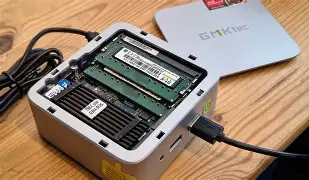
On the opposite side of the spectrum is the Gmktec Nucbox G10. This is not a storage device, but a complete, autonomous computer condensed into a chassis small enough to fit in the palm of a hand. The Nucbox G10 is part of the "NUC" (Next Unit of Computing) category, pioneered by Intel but perfected by specialist manufacturers like Gmktec. Inside its diminutive frame, the G10 houses a processor, RAM, a motherboards, and integrated graphics—essentially everything found in a laptop minus the screen and keyboard.
The G10 typically features modern mobile processors, such as those from the Intel Core or AMD Ryzen families, optimized for efficiency. These chips are designed to handle tasks ranging from office productivity and web browsing to 4K video playback and light gaming. The Nucbox G10 is frequently used as a "headless" server (one without a dedicated monitor), a home theater PC (HTPC), or a space-saving workstation for office environments where a bulky tower would be impractical.
Connectivity is the hallmark of the Nucbox G10. Despite its size, it usually offers multiple USB ports, dual HDMI or DisplayPort outputs for multi-monitor setups, and high-speed Ethernet. Modern versions also include Wi-Fi 6 or 6E and Bluetooth, making it a highly versatile hub. While it contains an internal M.2 SSD for its operating system and applications, its storage capacity is infinitesimal compared to the Seagate Exos; usually capped at 2TB or 4TB. Its purpose is to process data, run software like Photoshop or Excel, and manage network traffic.
Discover deals on Laptops & Computers — updated daily.
View Offers →Pros of the Gmktec Nucbox G10 Mini PC
- Extremely compact form factor saves desk space and allows for VESA mounting behind a monitor.
- Highly energy-efficient, consuming significantly less power than a traditional desktop tower.
- Versatile connectivity options including support for multiple 4K displays and high-speed networking.
- Quiet operation under most workloads, making it ideal for bedrooms or quiet office environments.
- Cost-effective solution for users who already own peripherals (monitor, mouse, keyboard) and need a core system upgrade.
Cons of the Gmktec Nucbox G10 Mini PC
- Limited internal expansion; you cannot add large 3.5-inch hard drives or full-sized dedicated graphics cards.
- Thermal constraints mean the CPU may throttle during sustained heavy loads like 3D rendering.
- Integrated graphics are not suitable for high-end AAA gaming or heavy professional video editing.
- Exterior casing is often plastic, which may not feel as premium as some aluminium-clad alternatives.
Comparison Table: Functionality and Hardware Specifications
| Feature | Seagate Exos Mozaic M 30TB | Gmktec Nucbox G10 Mini PC |
|---|---|---|
| Primary Function | Data Storage (Massive Capacity) | Computing and Data Processing |
| Core Technology | HAMR (Magnetic Platter) | CPU/GPU Integrated Circuits |
| Form Factor | 3.5-inch Internal Drive | Small Form Factor (SFF) Mini PC |
| Connectivity | SATA or SAS Interface | USB, HDMI, Ethernet, Wi-Fi |
| Operating System | None (Requires a host computer) | Windows, Linux, or ChromeOS |
| Typical Use Case | Cold storage, NAS, Backup, Server | Office work, HTPC, Digital Signage |
| Power Source | Powered via host system | External power adapter (DC) |
Key Differences Explained
The most immediate difference between these two products is structural: the Seagate Exos Mozaic M is a component, whereas the Gmktec Nucbox G10 is a system. You cannot "turn on" the Seagate drive and browse the internet; it is a passive device that requires a motherboard, a CPU, and an Operating System to be functional. Conversely, the Nucbox G10 is a complete unit. You plug it into a wall and a monitor, and you have a working computer immediately.
Another profound difference is the way they handle data. The Seagate Exos is a storage medium. It is designed to hold information for the long term with high durability. The Nucbox G10 is a processing environment. It uses its RAM and CPU to manipulate data. If you were to run a Plex media server, for instance, the Nucbox G10 would be the "brain" that transcodes the video and serves the interface, while the Seagate Exos would be the "library" where the actual movie files reside.
Furthermore, their physical requirements are vastly different. The Seagate Exos Mozaic M is an internal 3.5-inch drive. It needs to be screwed into a drive bay with a SATA power and data cable. If a user wanted to use it with the Nucbox G10, they would actually need an external USB docking station or a separate NAS enclosure, because the Nucbox G10 is physically too small to fit a 3.5-inch drive inside its chassis. The G10 typically only supports the smaller, stick-like M.2 NVMe SSDs.
Real-World Use Cases
To truly understand which device a buyer needs, it is helpful to look at how these items are used in the real world. Many professionals actually find themselves needing both, but for very different reasons.
The Creative Professional (Photographer/Videographer)
A wedding photographer who shoots in 8K video or high-res RAW files will quickly find that a laptop or a Mini PC like the Gmktec G10 fills up its 512GB or 1TB internal drive in a single weekend. For this user, the Seagate Exos Mozaic M is an essential "archive." They would likely install the drive into a multi-bay NAS. They perform their active editing on the Nucbox G10 (using its CPU) but save the finished projects and the massive raw footage files on the 30TB Seagate drive. Here, the drive acts as the long-term insurance policy for their digital assets.
The Small Business Owner
A small shop owner needs a computer to run point-of-sale software, manage inventory in Excel, and occasionally browse the web for supplies. They have no need for 30TB of storage—it would be a waste of money. Instead, they need a reliable, tiny computer that can hide under a counter. The Gmktec Nucbox G10 is the perfect solution. Its internal 512GB SSD is more than enough for their spreadsheets, and its small size keeps the workspace tidy.
The Home Media Enthusiast
A user who wants to build a "private Netflix" (using software like Jellyfin or Plex) would view these two items as two halves of a whole. They might use the Nucbox G10 as the server because it is energy-efficient and has a processor capable of "transcoding" (changing the video quality on the fly for different devices). However, they would need the Seagate Exos Mozaic M to actually hold their collection of thousands of 4K Blu-ray rips. Because the drive doesn't fit in the PC, they would likely connect the drive via a specialized enclosure or a separate NAS unit that the Mini PC talks to over the network.
Shop the latest Laptops & Computers picks on Amazon.
See Deals →Buying Guide: Which One Should You Buy?
Decinement between these two hardware pieces depends entirely on your current pain points. Are you running out of space, or is your computer too slow and bulky?
Buy the Seagate Exos Mozaic M 30TB if:
- You are building or expanding a NAS (Network Attached Storage) or a home server.
- You deal with massive datasets, such as scientific data, video archives, or large-scale backups.
- You want the highest possible storage density to save on physical space and power consumption in a server rack.
- You already have a capable computer and simply need a place to "dump" files for long-term safekeeping.
Buy the Gmktec Nucbox G10 Mini PC if:
- You need a new computer for office work, school, or light content creation.
- You want to replace a bulky desktop tower with something that can be hidden or mounted behind a screen.
- You are looking for a dedicated machine to run local services like a home automation hub (Home Assistant) or a media player.
- You have a limited budget and need a full system including a processor and OS, rather than just a storage component.
Technical Integration: Using Them Together
It is worth noting that for tech-savvy users, the "Difference" between these two becomes a "Synergy." The trend in modern computing is moving away from "All-in-One" towers. Instead, many users are opting for a "Compute/Storage Split." In this setup, you use a Mini PC like the Gmktec Nucbox G10 as your daily driver because it is quiet and efficient. You then offload all your storage needs to a Seagate Exos drive located in a separate enclosure or a server in the closet.
This "Decoupled Architecture" has several benefits. If your Nucbox G10 becomes obsolete in three years, you can replace the Mini PC without touching your 30TB of data. Similarly, if you need more storage, you can add another Exos drive without having to open up your computer. This modular approach is the gold standard for enterprise environments and is becoming increasingly popular for home offices.
Conclusion
The Seagate Exos Mozaic M 30TB and the Gmktec Nucbox G10 Mini PC represent two different pillars of technology. The Seagate drive is a masterpiece of mechanical engineering and physics, pushing the limits of how much information we can store on a physical platter using lasers and magnets. It is the ultimate "Memory" for the digital age, catering to those who never want to see a "Disk Full" error message again.
The Gmktec Nucbox G10, on the other hand, is a masterpiece of miniaturization and silicon efficiency. It represents the liberation of the personal computer from the heavy, dusty boxes of the past. It provides the "Logic" and the "Interface" that allows us to actually interact with our digital lives. While they are vastly different in form and function, they both share a common goal: making high-performance technology more accessible and efficient. Whether you need the massive vault of the Exos or the agile engine of the Nucbox, understanding their specific roles ensures that your tech investment aligns perfectly with your digital lifestyle.