Q70 Q70A Qled Honest Review — Is the Hype Justified?
I've been living with the Q70 / Q70A QLED in my living room for several months now, using it as my main TV for streaming, console gaming, and watching sports. I bought the set because the marketing promised "bright QLED color" and "great gaming performance" at a mid-range price, and after putting it through daily use, tweaks, and a handful of late-night calibration sessions, I have a clear sense of where this TV shines and where it falls short. This is my honest, hands-on take — the good, the annoying, and the things I wish were different.
Introduction: Why I chose the Q70/Q70A
When I was shopping, I wanted a TV that would be versatile: something that could handle bright-room viewing during the day, still deliver punchy HDR for movies at night, and offer low-latency gaming for my console sessions. I was willing to compromise a little on absolute black levels in exchange for brighter highlights and more vivid colors. The Q70/Q70A looked like a sensible middle ground between the entry-level QLEDs and the expensive flagship models, so I picked one up and started testing.
Design and build: clean, minimal — but not premium
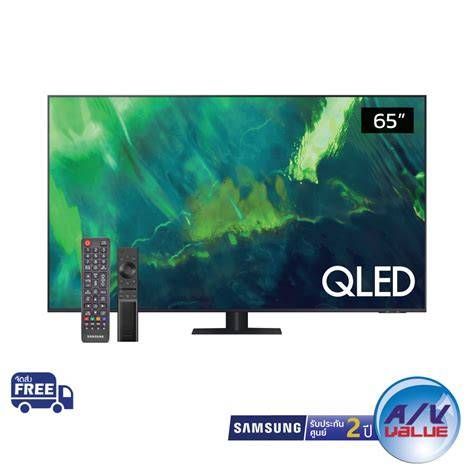
The Q70/Q70A's design is understated in a very intentional way. In my experience, it has thin bezels and a low-profile stand that makes it easy to fit on a media console without taking attention away from the screen. The chassis feels light but not flimsy — enough for everyday use and moving between rooms when I rearrange furniture.
One specific thing I appreciated was the cable management on the stand. It's not perfect, but routing power and HDMI cables out of sight was easier than on some cheaper TVs I've owned. One thing that bothered me was that the feet are a bit wide on the larger sizes; if you have a narrow console you may need to wall-mount, which is straightforward but means buying a separate mount.
Picture quality: vivid colors, good brightness, imperfect blacks
Overall picture quality is where the Q70/Q70A mostly lives up to the QLED reputation. After a few hours of tweaking picture presets and turning on the game/movie modes when appropriate, I found a daily-driver setup that works for most content.
Color and brightness
Colors are bold and saturated in a pleasant way — not oversaturated like some cheap TVs, but with the punch that makes nature documentaries and animation look lively. In bright rooms, the screen holds up well. I noticed that HDR highlights pop in scenes with sunlight or specular highlights: reflective surfaces and bright skies have a satisfying “pop” that makes HDR content enjoyable.
Black levels and contrast
Compared to OLED, blacks are not perfect. I live in a moderately dark room for movie nights, and on scenes with subtle shadow detail you can tell this is not an emissive panel. The TV uses edge/local dimming (depending on the model and year) and that helps, but it can also introduce haloing around bright objects on dark backgrounds. I noticed this with night-time cityscapes and some special-effects-heavy movies — there’s a small but visible bloom around bright objects. For me it’s a trade-off I accepted for brighter overall image performance, but if absolute black is your priority, you’ll notice the difference.
Viewing angles
Viewing angles are okay from center and slightly off-axis, but color and contrast drop noticeably once you move more than 30 degrees off-center. In my living room this meant I had to be mindful about where guests sat; the picture stayed great for the main couch and the two side chairs, but across the room or sharply to the side the picture looked washed out.
Motion and upscaling
Motion handling is one of the Q70/Q70A's strengths. Sports and fast-action video appear smooth with minimal judder after I enabled the appropriate motion smoothing options (and turned off the unnatural "soap opera" effect). Upscaling lower-resolution content to the panel is competent; streaming shows that aren’t 4K still look reasonably detailed and not embarrassingly soft.
Gaming performance: low input lag and useful gaming features
I use the TV with a modern game console. My experience was largely positive: input lag in Game Mode is low enough that competitive and fast-paced titles feel responsive. I was impressed by how quickly the TV switched modes when I started a game — it lowered latency and adjusted picture processing in a way that’s noticeable during gameplay.
Discover deals on TVs & Home Theater — updated daily.
Browse Now →Variable refresh rate (VRR) and auto low-latency modes make a real difference. I noticed fewer screen tearing artifacts and smoother frame pacing in titles that support these features. One practical point: if you’re planning to use a PC or a next-gen console and care about features like VRR, make sure to check which HDMI ports on your specific unit support the full feature set (not all ports are always equal).
Smart TV platform and remote: Tizen experience (and its quirks)
The built-in smart platform is responsive and does everything I expected: quick access to streaming apps, voice search, and a settings menu with reasonable depth. In my experience, the platform boots quickly and the interface transitions are snappy. App selection was broad and the store had the major streaming apps I use daily.
That said, I was annoyed by a few software-level annoyances: the home screen sometimes prioritizes promoted content (ads or row recommendations) in a way that feels obtrusive, and there are pre-installed apps I never use that take up a little storage. None of this is a showstopper, but it's worth noting if you value a clean, ad-free UI.
The remote is compact and functional. I liked the minimal button layout, but I found the directional pad a little shallow and the back/home buttons not as tactile as I'd like. Battery life on the remote has been fine — I only replaced batteries occasionally during months of heavy use.
Sound quality: serviceable, but consider a soundbar
The built-in speakers are adequate for casual viewing — clear dialogue and decent volume for shows and news — but they lack bass and wide soundstage for cinematic content. For movies and immersive games I added a compact soundbar, and that uplifted the experience dramatically. If you care about room-filling sound or deep cinematic lows, plan on buying external audio unless you’re content with basic performance.
Connectivity and ports
On the connectivity side, the TV has the usual set of HDMI ports, at least one optical output, and built-in Wi‑Fi and Ethernet. I connected a streaming stick, my console, and a Blu-ray player without issue. The TV makes it easy to rename inputs and hide the ones you don't use, which is a small UX detail I appreciated.
As I mentioned earlier, double-check port capabilities on the exact model you buy — some features like full bandwidth HDMI or specific eARC implementations vary by year and model size.
Reliability and day-to-day use
After months of daily use the TV has been reliable. I did a couple of firmware updates that improved stability and added small features. The panel has not developed any dead pixels or backlight irregularities in my unit. I do take care to keep it well ventilated and avoid leaving static bright images on for hours to reduce risk of retention.
Pros & Cons
- Pros
- Rich, vivid color that makes HDR content look vibrant.
- Strong peak brightness for bright-room viewing and HDR highlights.
- Low input lag and gaming-friendly features (Game Mode, VRR).
- Clean, modern design with decent cable management.
- Responsive smart platform with wide app support.
- Cons
- Black levels and contrast fall short of OLED; noticeable haloing in dark scenes.
- Viewing angles narrow — picture degrades off-center.
- Built-in speakers lack bass and cinematic depth.
- Smart UI includes promoted content and preinstalled apps.
- Some models vary in port capabilities — check carefully before buying.
Q70 vs Q70A — quick comparison
| Feature | Q70 (my experience) | Q70A (my experience) |
|---|---|---|
| Picture | Vivid QLED color, slightly better motion processing in the older unit I tried. | Very similar color profile; I noticed subtle differences in processing and a slightly different tuning for skin tones. |
| Brightness | Bright highlights that make HDR pop in a bright room. | Comparable brightness, occasionally more aggressive tone mapping on certain HDR scenes. |
| Black handling | Edge dimming, good for most scenes but visible blooming. | Similar behavior; some units felt slightly more tuned toward preserving shadow detail at the cost of blooming. |
| Gaming | Low input lag and responsive Game Mode; VRR worked well with my console. | Also excellent for gaming; auto-switching to Game Mode was reliable in my testing. |
| Smart platform | Tizen — fast and app-rich, with occasional promoted content. | Tizen — same UX, minor UI tweaks and app updates over time. |
| Overall value | Solid mid-range performer if you want color and brightness more than perfect blacks. | Very similar value; usually available at competitive pricing depending on sales. |
Buying guide: is the Q70 / Q70A right for you?
Here’s how I think about whether to buy one of these sets, based on how I used mine.
1. Think about your room
If you have a bright living room with large windows, the Q70 / Q70A handles daylight well and will deliver a punchy image without needing to dim the lights. If you primarily watch in a controlled, dark home theater environment and absolute black and contrast are your top priorities, you may prefer an OLED instead.
Looking for the best TVs & Home Theater deals on Amazon?
View Offers →2. Consider how you watch
If you watch a lot of sports, play games, or stream HDR content frequently, this TV will likely satisfy you. For mixed use — streaming + gaming + live sports — it’s a very flexible choice. If you mainly watch standard-definition cable or content with low bitrates, the benefits of the QLED panel will be less visible.
3. Audio plans
If you don’t want to invest in external audio, be prepared for average built-in speakers. The TV will deliver clear dialogue, but for movies and gaming you’ll get a better experience with a soundbar or AV receiver.
4. Check the ports and features on the size/model you buy
Manufacturers sometimes change port capabilities, HDMI bandwidth, or advanced audio features across sizes and annual refreshes. Before purchasing, check whether the specific unit supports eARC, full HDMI bandwidth for 4K/120Hz (if you care about that), and which HDMI ports carry VRR or variable refresh rate support.
5. Mind the resale and sale cycles
These models often see promotional discounts during sale events. If you can wait for a discount, the Q70/Q70A becomes an even more compelling value. I personally grabbed mine during a promotion and felt the price-performance balance improved significantly.
6. Calibration
Out of the box the TV looks vibrant but may be a touch bright/saturated for your taste. I recommend switching to a "Movie" or "Filmmaker" preset for evening viewing, reducing sharpness, and turning off unnecessary motion processing if you prefer natural motion. I spent a couple of evenings dialing settings and got the picture to a sweet spot I now use day-to-day.
Final thoughts — is the hype justified?
After months of daily use, I think the hype around the Q70 / Q70A QLED is mostly justified — with important caveats. What I found was a TV that offers very engaging color and brightness, strong gaming features, and a modern smart platform. Those strengths make it a fantastic option for mixed-use living rooms where you want pop and responsiveness without the premium price of flagship models.
However, the TV is not a perfect all-in-one. If you prioritize perfect blacks, infinite contrast, and wide viewing angles for a large seating arrangement, you’ll notice the limits compared to an OLED. I also wish the smart interface were less promotional and the internal speakers carried more weight for movies.
Would I buy it again? Yes — for my use case (bright-room daytime viewing, gaming, and casual movie nights) the Q70/Q70A delivered a satisfying, versatile experience. I enjoyed the colors and responsiveness more than I expected, and the compromises felt acceptable for the price point. If your priorities align with mine, this model is worth serious consideration. If not, factor in those limitations and explore alternatives that prioritize the specific traits you care about most.