The Truth About the Edifier R1280T: Pros, Cons, and Verdict
The quest for the perfect desktop audio setup often leads enthusiasts into a labyrinth of high-priced studio monitors and overly marketed computer speakers that prioritize aesthetics over acoustic fidelity. In this crowded landscape, one product has consistently managed to rise above the noise: the Edifier R1280T. These active bookshelf speakers have achieved a near-legendary status among budget audiophiles, college students, and home office professionals alike. But as with any product that gains a cult-like following, it is essential to peel back the layers of hype to understand exactly what these speakers offer and, perhaps more importantly, where they fall short. This analysis explores the technical nuances, real-world performance, and long-term value of the Edifier R1280T to determine if they truly remain the gold standard for entry-level audio.
The Anatomy of a Modern Classic
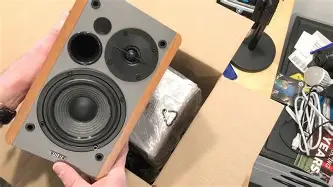
The Edifier R1280T is a set of powered bookshelf speakers, meaning the amplification is built directly into the units, eliminating the need for an external receiver or amplifier. This all-in-one approach is the primary reason for their popularity in the digital age. Measuring approximately 9.2 inches tall, 5.7 inches wide, and 7.7 inches deep, they occupy a middle ground between cramped computer speakers and full-sized hi-fi cabinets. Their design language is a deliberate nod to retro aesthetics, featuring grey wood-grain side panels (built from Medium-Density Fiberboard or MDF) and a grey fabric grille that can be removed to reveal the drivers beneath.
Internally, each speaker houses a 4-inch bass driver and a 13mm silk dome tweeter. The total power output is rated at 42 Watts RMS (21W per speaker), which might sound modest compared to the inflated "peak power" numbers often found on big-box store shelving, but for near-field listening—where the listener is seated just a few feet away—it is more than sufficient. The inclusion of a front-facing bass reflex port is a critical design choice, as it allows users to place the speakers closer to walls without the muddying bass reflections typically associated with rear-ported designs.
Sound Signature and Acoustic Character
The most common praise leveled at the R1280T is its "smooth" and "warm" sound signature. In technical terms, this suggests a slight emphasis on the mid-bass and lower-midrange frequencies, coupled with a relaxed treble response. Unlike many budget speakers that attempt to mask poor driver quality by cranking up the high-end to create an artificial sense of "clarity," Edifier has opted for a more musical approach. The silk dome tweeters provide a non-fatiguing high-end that allows for hours of listening without the ear-piercing sibilance often found in cheap plastic enclosures.
The 4-inch woofer is capable of producing respectable punch for its size, particularly in the 60Hz to 150Hz range. However, physics dictates certain limitations; these speakers will not shake the floor or provide the sub-bass rumble required for certain EDM or cinematic scores. They are tuned for balance rather than raw power. Vocals are rendered with surprising intimacy and body, making them an excellent choice for podcasting, video conferencing, and acoustic music. The stereo imaging—the ability to perceive the placement of instruments within a soundstage—is wide enough to be immersive on a standard desktop, provided the speakers are angled toward the listener's ears.
Adjustability and Control
One of the standout features of the R1280T is the side-mounted control panel. While many speakers hide their knobs on the back, making them difficult to reach, Edifier placed three dials on the side of the active (right) speaker: Master Volume, Bass, and Treble. These tone controls are more than just gimmicks. They allow the user to subtly adjust the response to compensate for room acoustics or personal preference. For instance, if the speakers are placed on a resonant wooden desk, a slight turn down of the bass knob can clean up the mid-range significantly. The volume knob also acts as a digital encoder that can be pressed to mute the audio, though the physical feedback is minimal.
Comparative Analysis
To understand where the R1280T fits in the market, it is helpful to compare it against its closest competitors and its own sibling models. The table below highlights the key differences between the R1280T and common alternatives.
| Feature | Edifier R1280T | Edifier R1280DB | PreSonus Eris 3.5 | Micca PB42X |
|---|---|---|---|---|
| Input Options | Dual RCA (Analog) | RCA, Optical, Coaxial, Bluetooth | RCA, 1/4" TRS, 3.5mm Aux | RCA, 3.5mm Aux |
| Sound Signature | Warm / Relaxed | Warm / Digital | Analytical / Neutral | V-Shaped / Bright |
| Bass Port | Front-firing | Front-firing | Rear-firing | Rear-firing |
| Best Case Use | General Media / Music | TV / Living Room | Content Creation / Monitoring | Alternative Hi-Fi Entry |
As the table illustrates, the "T" model is the most basic iteration. The "DB" version adds digital inputs and Bluetooth, which is vital for users wanting to connect a modern television or stream from a smartphone. However, for those using a dedicated computer DAC (Digital-to-Analog Converter) or a turntable with a built-in preamp, the R1280T offers the exact same acoustic performance at a lower price point.
Discover deals on Audio & Headphones — updated daily.
View Offers →Real-World Use Cases
The "truth" about these speakers is that their value changes depending on how they are used. In a home office environment, they are nearly unbeatable. Because they are front-ported, they can sit flush against a wall on a cluttered desk without sounding boomy. Their ability to deliver clear dialogue makes them superior to almost any integrated monitor or laptop speaker for professional video calls.
For turntable enthusiasts, the R1280T is often the first recommendation for a starter setup. While true audiophiles might scoff at the idea of using a $100 speaker with a vinyl collection, the reality is that the warm sound signature of the Edifiers complements the "analog soul" of vinyl beautifully. Since they include dual RCA inputs, a user can have both their computer and their turntable plugged in simultaneously, switching between them by simply playing audio from the desired source.
In a gaming context, these speakers offer a different experience than "gaming headsets." They provide a sense of scale and atmosphere that headphones often lack. While they don't offer the positional accuracy of a 7.1 surround system, the stereo separation is precise enough to tell which direction an enemy is approaching from in a standard FPS. However, the lack of a dedicated subwoofer output means that those who want the literal "earth-shaking" explosions of modern AAA titles might find them a bit polite.
Pros and Cons
- Exceptional Build Quality: The MDF wood construction feels substantial and premium compared to the thin plastic enclosures found on most computer speakers in this price bracket.
- Front-Firing Port: This allows for versatile placement in small rooms or on narrow desks where the speakers must be pushed back against a wall.
- Dual RCA Inputs: The ability to connect two analog sources at once without unplugging cables is a massive convenience for multi-device setups.
- Non-Fatiguing Sound: The silk dome tweeter ensures that the high frequencies are smooth rather than sharp, making them comfortable for long-term listening.
- Lack of Sub-Bass: With only a 4-inch woofer, frequencies below 60Hz drop off significantly, which may disappoint fans of hip-hop or action movies.
- No Subwoofer Output: There is no easy way to add a powered sub later on; you would need a more complex wiring solution or a different set of speakers.
- Physical Size: While compact for bookshelf speakers, they may still be too large for very small desks or minimalist "minimal footprint" setups.
- Old-School Connectivity: The absence of Bluetooth or optical inputs in this specific model limits its use with modern smartphones and some newer slim-profile TVs.
Comprehensive Buying Guide
Is the Edifier R1280T right for you? Before making a decision, consider the following factors that define the ownership experience.
Power and Volume Requirements
The R1280T is designed for "near-field" listening. If you plan to use these to fill a large living room for a party, you will likely find them wanting. While they can get surprisingly loud without distorting, they are at their best when positioned 2 to 5 feet from the listener. If your goal is a primary home theater system, you should look toward Edifier's larger R1700BT or R2000DB models.
The Importance of Isolation
Because these speakers have a decent amount of mid-bass energy, they can vibrate the surface they are sitting on. For the best sound quality, it is highly recommended to use foam isolation pads or small speaker stands. Elevating the tweeters so they are at ear level will also dramatically improve the clarity and perceived detail of the soundstage. Many users find that the "muddiness" they initially hear is actually just vibrations traveling through their desk.
Cables and Connections
Out of the box, Edifier provides a 3.5mm to RCA cable and an RCA to RCA cable. This covers almost every standard computer and laptop connection. However, the speaker wire used to connect the active speaker to the passive one is relatively thin. While it works perfectly fine, those who need to place the speakers far apart might want to purchase a longer roll of standard 16-gauge oxygen-free copper speaker wire for a more secure and robust connection.
Find top-rated Audio & Headphones products at great prices.
Shop Amazon →Design and Aesthetics
The grey and wood-grain look is polarizing. It fits perfectly in a traditional office or a "cozy" room setup, but it may look out of place in a modern "RGB gaming" environment or an ultra-minimalist white-and-glass workspace. Edifier does offer white versions of some models, but the classic R1280T is most commonly found in the signature wood aesthetic.
Technical Deep Dive: Why "Active" Matters
One aspect often overlooked by casual buyers is the internal Class D amplification. In the past, "computer speakers" were often disparaged because they used cheap, noisy internal amps that hummed when no music was playing. The R1280T is impressively quiet; the "hiss" floor is virtually non-existent at normal listening volumes. Because the engineers at Edifier knew exactly which drivers would be used, they could tune the internal amplifier to match the impedance and power handling of the woofer and tweeter perfectly. This synergy is why active speakers like these often sound better than a mismatched pair of passive speakers and a cheap "mini-amp" from an unknown brand.
Furthermore, the crossover—the internal component that tells the bass frequencies to go to the woofer and the high frequencies to go to the tweeter—is well-calibrated. There is a smooth transition in the vocal range, which prevents the "hollow" sound that occurs when there is a frequency gap between the two drivers.
The Verdict: A Budget Audiophile Icon
The truth about the Edifier R1280T is that it is not the "best" speaker in the world, but it might be the best speaker for its price. It represents a pivot point where audio moves from "disposable utility" to "genuine enjoyment." It honors the music by providing a balanced, warm, and rich experience that respects the original recording without adding unnecessary artificial processing.
If you are a professional researcher, a student, or someone who spends eight hours a day at a desk, the transition to a set of speakers like these is a quality-of-life improvement that shouldn't be underestimated. They provide a sense of space and clarity that keeps the ears from getting tired. While the lack of deep sub-bass and modern digital connections like Bluetooth might be a dealbreaker for some, those seeking a pure, reliable, and aesthetically pleasing analog audio solution will find the R1280T to be an exceptional investment.
In conclusion, the Edifier R1280T earns its reputation not by being flashy, but by being consistent. It nails the fundamentals of cabinet construction, driver selection, and user-facing controls. For anyone looking to take their first step into the world of "real" audio without spending hundreds or thousands of dollars, the path starts here. It is a product that knows exactly what it is trying to be: a dependable, great-sounding, and affordable gateway to better sound.